 Türkçe
 English
Duyurular
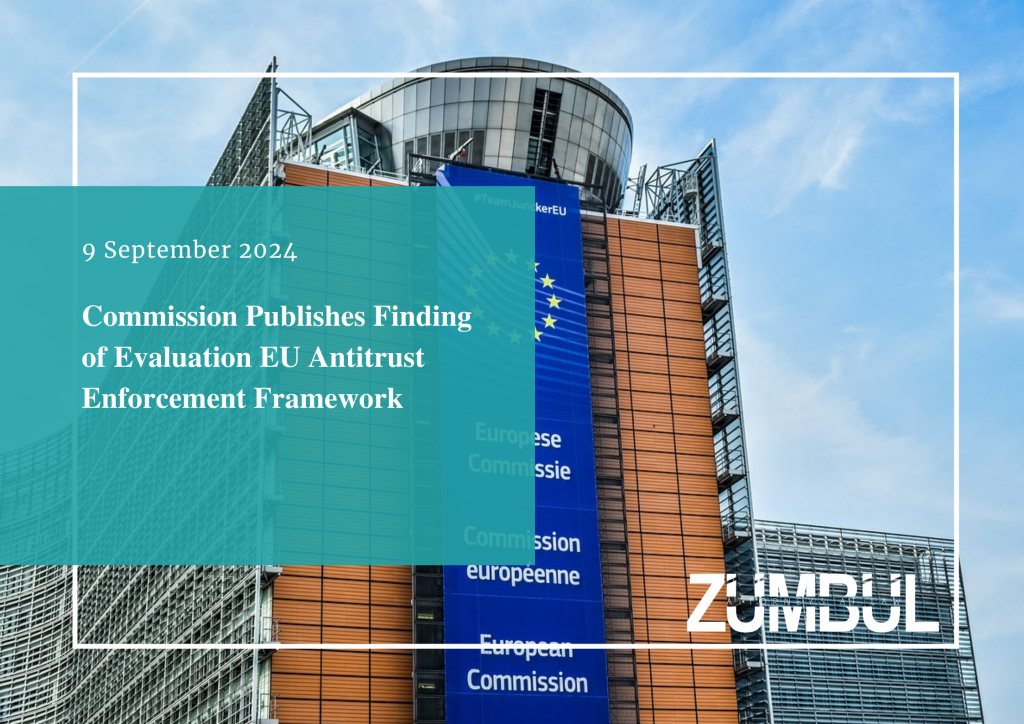
Commission Publishes Finding of Evaluation EU Antitrust Enforcement Framework
On September 5, 2024, The European Commission (“Commission”) has published a Staff Working Document (“SWD”) summarising the findings of the evaluation of the EU Regulations which lay out the procedures for the application of EU Competition Rules (Regulation 1/2003 and Regulation 773/2004, together the ‘Regulations').
The Regulations set out the procedural framework for the implementation of EU competition rules laid down in Articles 101 and Article 102 of the Treaty on the Functioning of the EU (“TFEU”). They have played a crucial role in the enforcement of EU antitrust rules since their entry into force 20 years ago.
Main Findings of the Evaluation;
- The Regulations have generally achieved their objective of effective, efficient and uniform application of EU competition rules. They continue to have EU added value and remain relevant.
- The main changes brought about by Regulation 1/2003 consisted in:
- First, the removal of the old system that required the notification of agreements to the Commission in order for companies to benefit from an exemption under Article 101(3) TFEU, is viewed very positively.
- Second, the implementation of a decentralised system of parallel enforcement of EU competition rules by the Commission and NCAs, which led to more effective enforcement. NCAs and the Commission have together adopted over 1,650 decisions of which more than 85% were adopted by NCAs. This shows that NCAs have become key enforcers of EU competition law together with the Commission.
- The European Competition Network (“ECN”) has been pivotal to achieving a uniform and effective application of EU competition rules, even if the cooperation within the ECN could be enhanced further. The evaluation showed the need to avoid unnecessary parallel investigations and further improve the relationship between EU and national competition laws to ensure a coherent enforcement of all available legal instruments.
- The evaluation also underlines the need for faster investigations. It identified several issues, some of which are connected to digitalisation, which may impact the effectiveness of investigation tools and powers that were written for ‘paper world' investigations.
Question and Answers On the Findigs of Evaluation of EU Antitrust Enforcement Framework
- What are the main conclusions of the SWD?
The Regulations created a framework for true co-enforcement of EU competition rules by the Commission, NCAs and national courts. By decentralising enforcement, the Regulations have paved the way for NCAs to become effective enforcers of EU competition rules. The same is true for national courts that have become increasingly important for enforcing these rules. Decentralised enforcement has been supported by the creation of the ECN, which has allowed NCAs and the Commission to work together to ensure coordination and an appropriate allocation of work among competition authorities. While the objective of a uniform and effective application of EU competition rules has been achieved overall, the evaluation results pointed to some concerns with the effectiveness of the coordination within the ECN.
The changes to the Commission's procedures introduced by the Regulations have also been useful and have enabled the Commission to effectively enforce EU competition rules. The rules have also proven to be resilient, given that they still provide a good framework for competition enforcement 20 years after coming into force. However, the economy's digitisation and globalisation, increased complexity of antitrust investigations and the need to adopt decisions faster raise questions about the effectiveness and efficiency of certain aspects of the Commission's procedures, such as the Commission's investigative tools, specifically requests for information, inspections and the power to take statements; the Commission's decision-making powers, in particular as regards interim measures, remedies and certain fines; and the procedures for granting access to file and rejecting formal complaints that will not be investigated further.
- What has been the outcome of antitrust enforcement under the Regulations?
Between 1 May 2004 and August 2024, the Commission has adopted 225 enforcement decisions, either finding an infringement of EU competition rules or accepting commitments that would remove its preliminary concerns. Under Regulation 1/2003, the Commission adopted important and at times groundbreaking decisions, including in the technology sector and the pharmaceutical sector, and in cases involving market partitioning. The Commission also adopted decisions increasing competition in former monopolistic markets, such as in the energy and transport sectors. It has investigated and fined new types of cartels. Between 1 May 2004 and end of 2022, the Commission has imposed fines of over €42 billion under Regulation 1/2003, approximately €37 billion of which has been upheld by the EU Courts. Between 2012 and 2021, the estimated total customer savings from all cartel and antitrust interventions by the Commission were between €50 to €87 billion.
- What will the Commission do to address the challenges identified in the SWD?
Based on the results of the evaluation, the Commission will reflect on whether a revision of the Regulations would be necessary to ensure the optimal effectiveness of the enforcement framework for Articles 101 and 102 TFEU. In such case, the possible ways forward to address the challenges identified may eventually be addressed in an impact assessment accompanying a Commission legislative proposal. However, the next steps and the consideration of a potential reform will be determined during the next Commission mandate. In any case, the learnings from the evaluation, including feedback and suggestions received from stakeholders during the evaluation process, that could be addressed within the current framework of the Regulations are already being reflected on and, where relevant, taken on board.
- Which are the specific areas identified by the Commission where there is a need for further reflection?
The Commission also notes certain procedural innovations that have been introduced, for example, in the Digital Markets Act or the Foreign Subsidies Regulation that could be a useful source of inspiration for any possible reform – for example, retention orders and confidentiality rings could help speed up certain aspects of investigations. In addition, the ECN+ Directive has to some (albeit limited) extent created some differences between the powers that the Commission has and those of NCAs. This concerns, in particular, the ability to summon representatives of companies for an interview, the ability to adopt remedies on the basis of their effectiveness and the ability to impose fines for breaches of prohibition decisions. As regards parallel enforcement of EU competition rules and cooperation within the ECN, the evaluation has pointed to potential opportunities for increased effectiveness, in particular as regards coordination in the context of parallel investigations and the optimal complementary enforcement and use of available legal instruments (including stricter national laws).
You can find further information for the press release here.
You can find further information for the Q&A here.
Kind regards,
Zumbul Attorneys-at-Law